
Nagano & Gifu: Tsumago & Magome Walk the Samurai Road Through the Kiso Mountains
The information provided is current as of May 2026.
About This Area
Tsumago & Magome, Nagano/Gifu
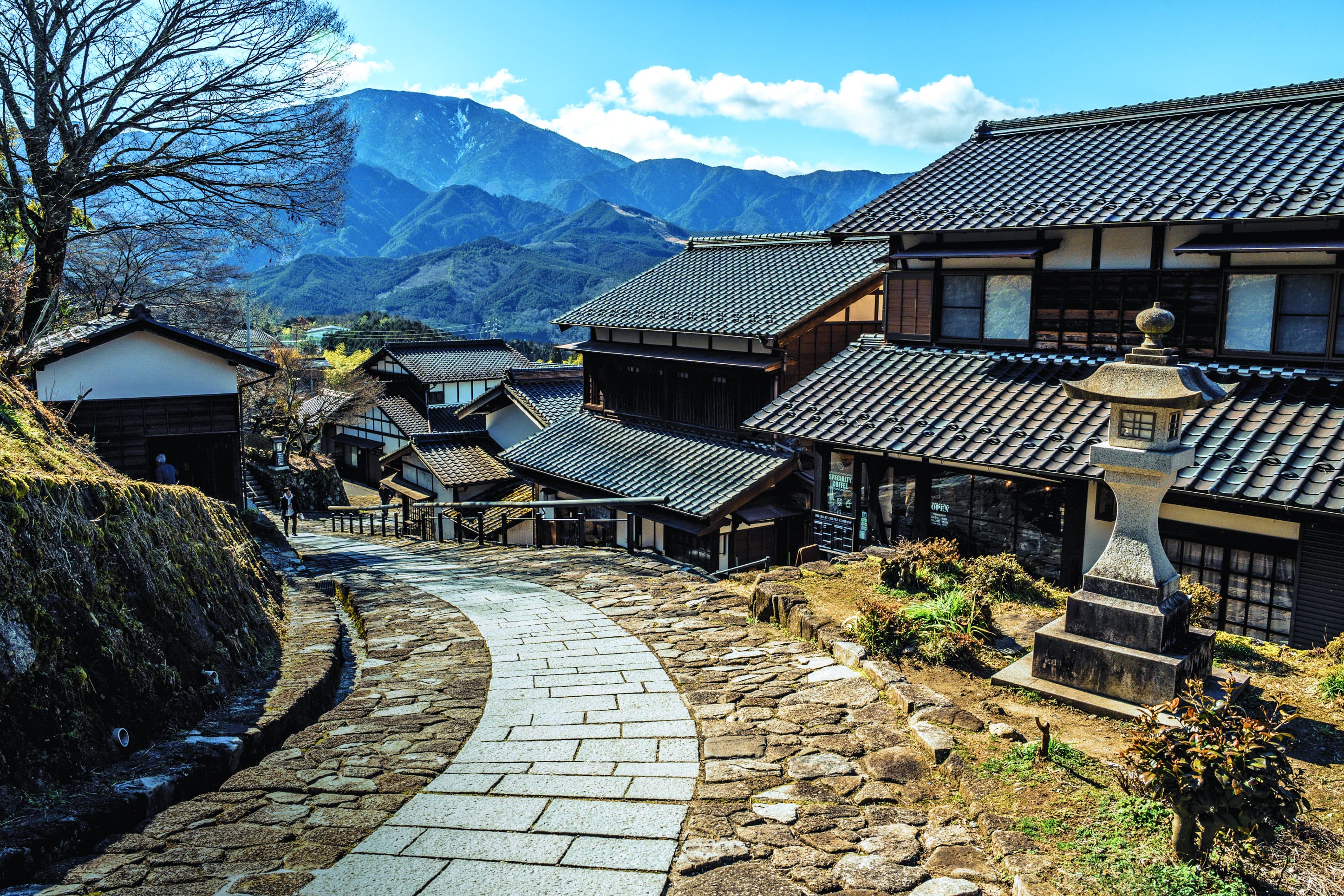
In the Edo period, the Nakasendo was one of the main highways connecting Edo (present-day Tokyo) to Kyoto — a journey of approximately 530 km. Along the route, post towns that still preserve their historic streetscapes remain, making it an ideal place to explore Japan's history on foot. The stretch between Tsumago-juku in Nagano and Magome-juku in Gifu spans approximately 9 km — about a 3-hour walk over mountain passes. Let's step into the footsteps of the samurai who once travelled this road.
Good to Know
The 'Magome-Tsumago Excursion Pass' grants unlimited travel on Kitaena Transport and Nagiso-machi Community Bus routes for 2 days at a great value. Available in English, you can also purchase a mobile ticket through transportation apps. When your legs tire, hop on a bus and explore the area at your own pace.
What You Can Do Here
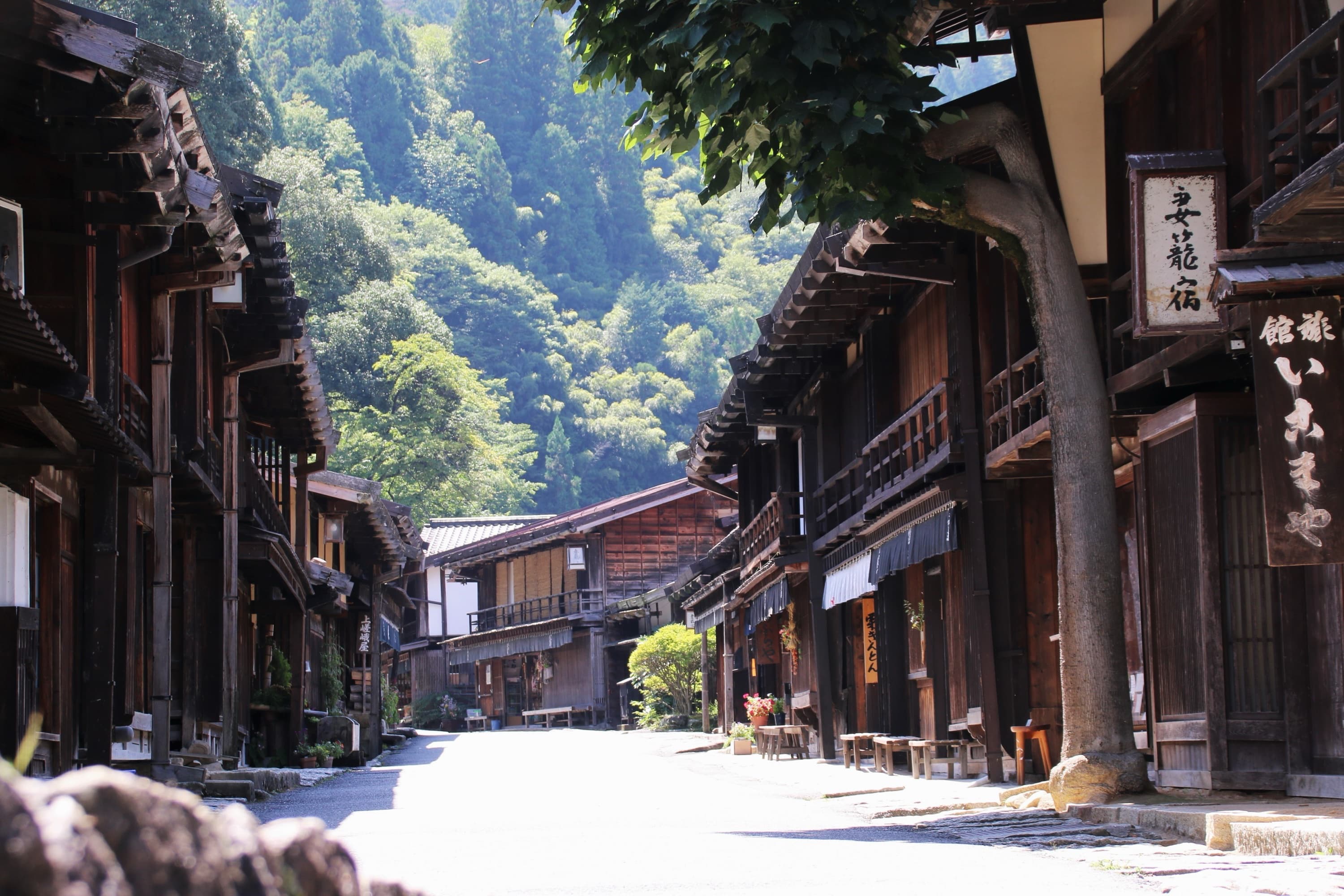
Relive the life of Edo-era travelers on foot
Walk the cobblestone slopes and rows of latticed townhouses, and you can almost feel the bustle of an Edo-era post town where people and goods once flowed. Away from the sounds of trains and cars, every step deepens the memory of your journey.
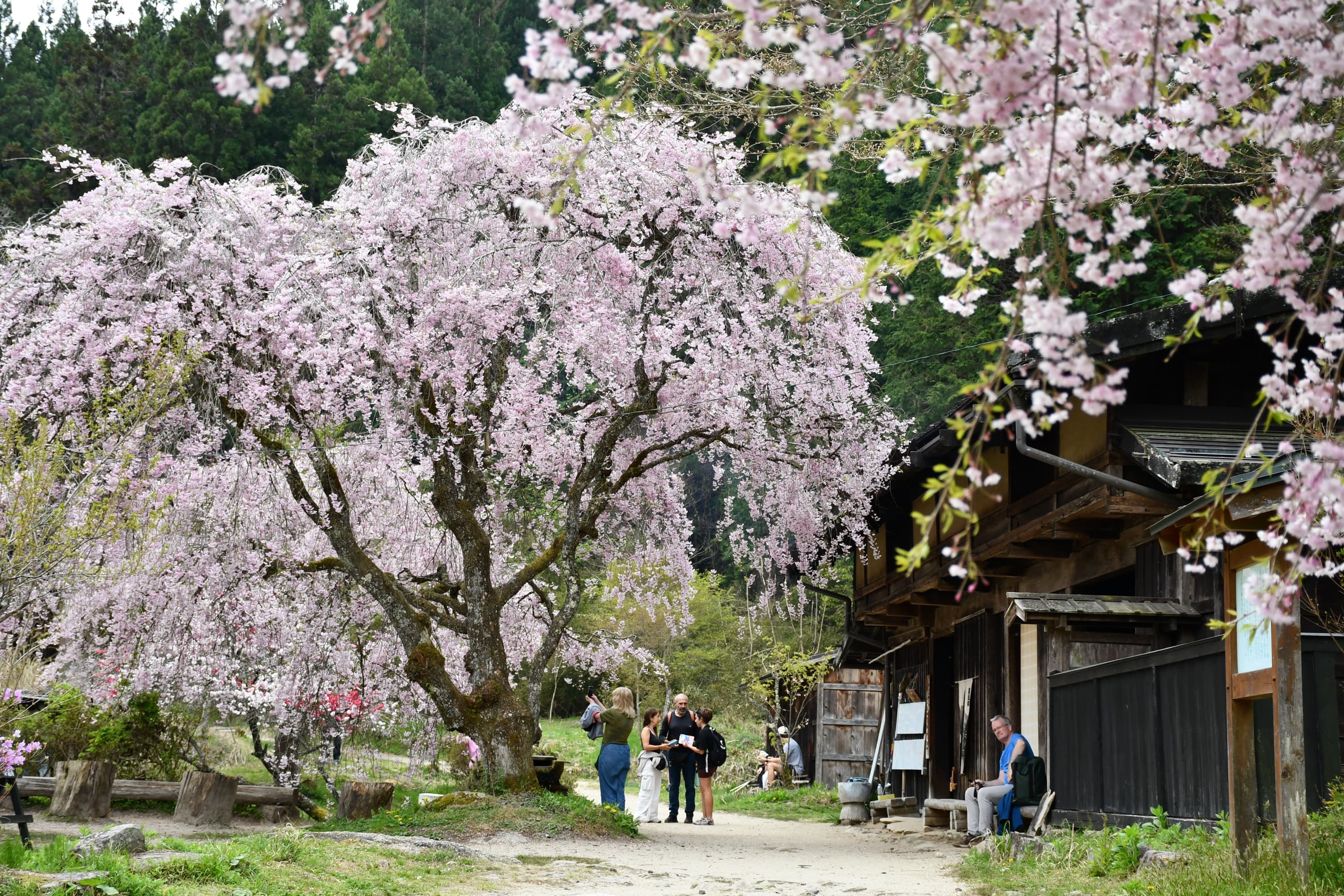
Hike between post towns through mountain scenery
The old Nakasendo between Tsumago and Magome winds through forests, mountain streams, and passes. Surrounded by nature that shifts with every season, you'll feel the true essence of the Kiso mountains.

Savor the food culture rooted in post-town life
Gohei-mochi and local mountain ingredients — the food of Tsumago and Magome is practical and deeply flavorful, born to sustain weary travelers. Treat yourself to these local specialties as a reward after crossing the mountain pass.
Spot Details
Nagiso-machi MuseumーWakihonjin Okuya
3-min walk from Tsumago-bashi bus stop
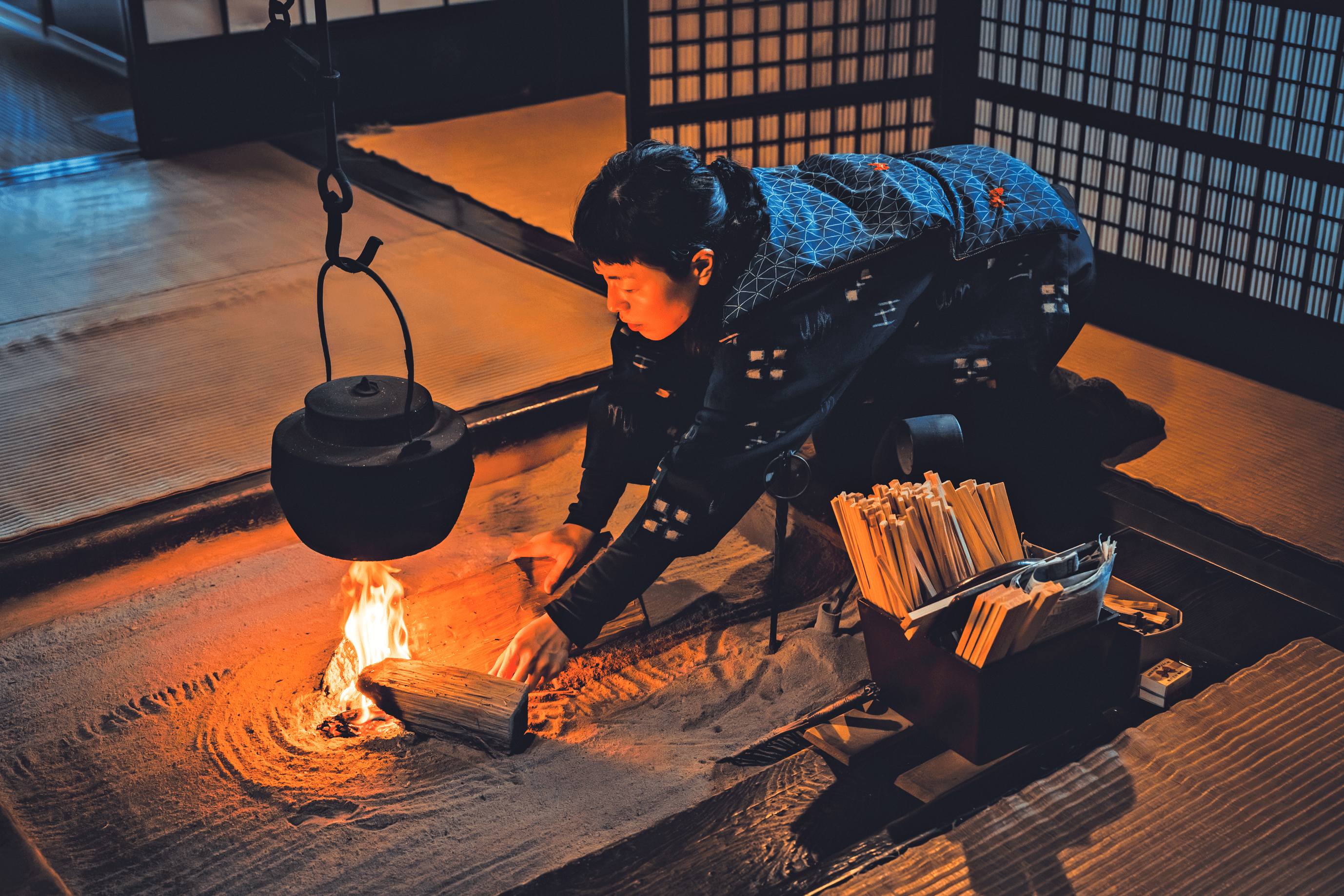
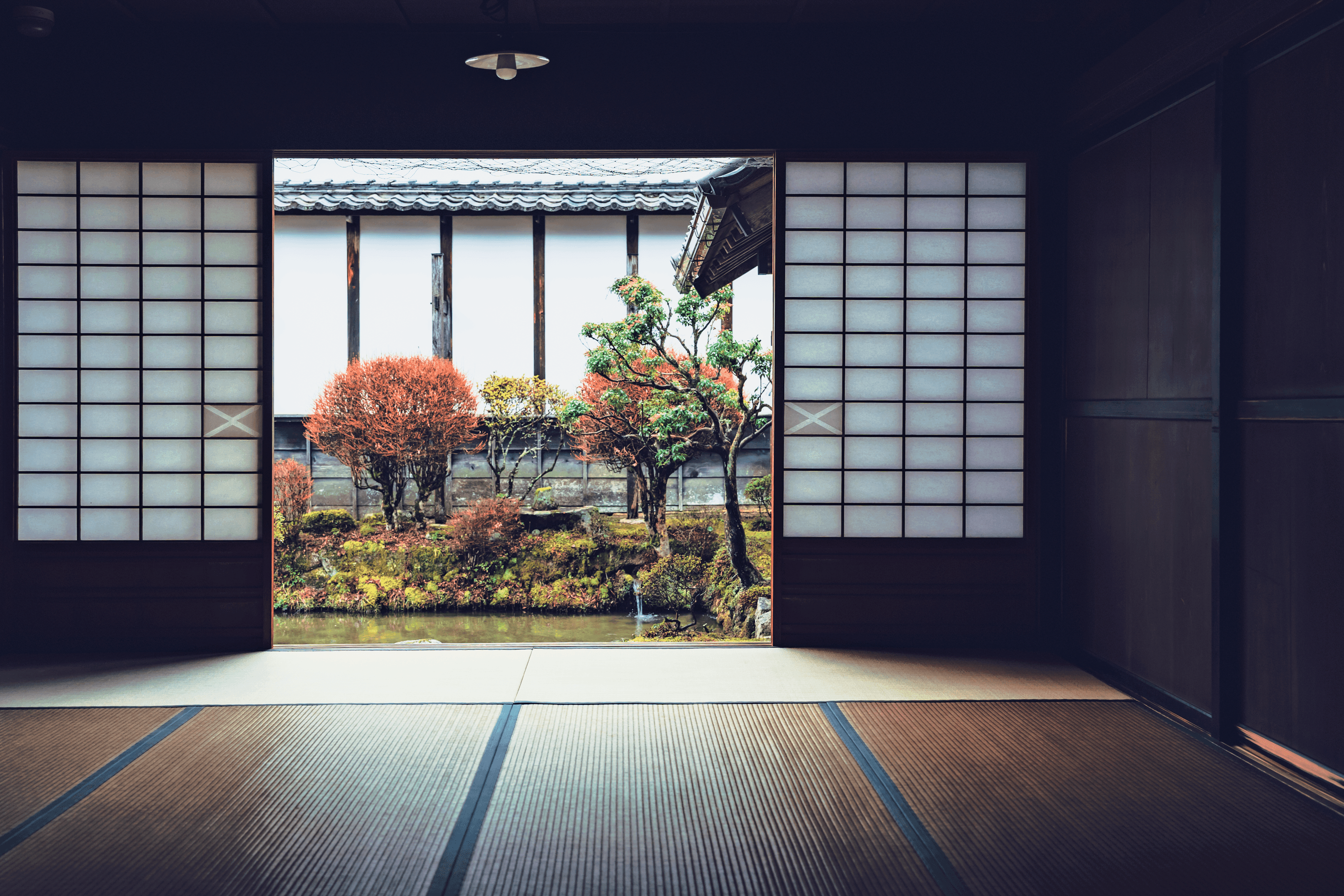
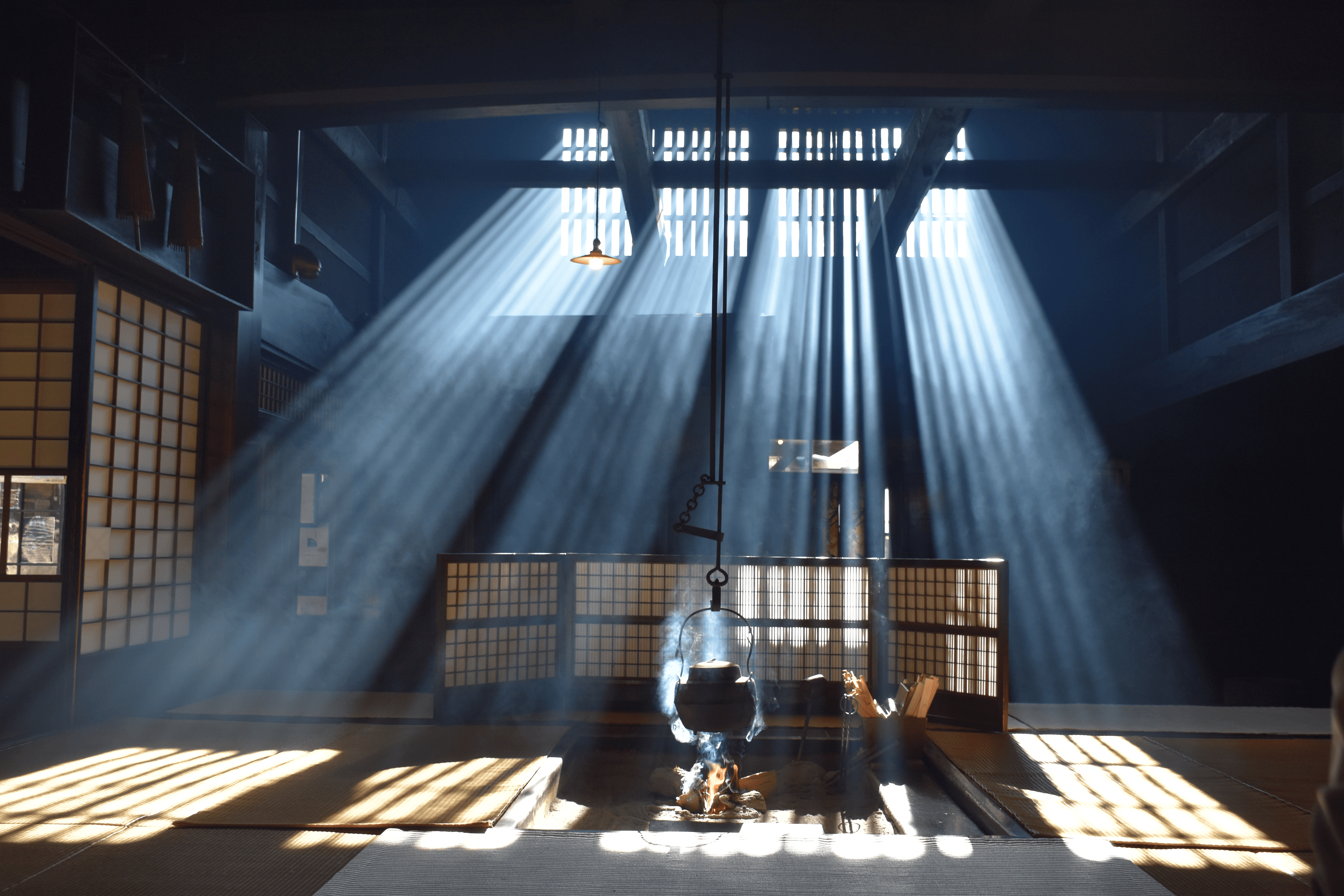
The residence of the Hayashi family, who served for generations as wakihonjin (sub-inn for feudal lords) and tonya (shipping agent). The current building was rebuilt in Meiji 10 (1877) after the ban on logging Kiso's five sacred trees was lifted, and was constructed entirely of hinoki cypress. On clear winter days, multiple beams of light filter through the lattice windows and stretch straight to the back of the irori hearth, painting a scene of breathtaking beauty.
Teahouse Ebiya
4-min walk from Tsumago-bashi bus stop
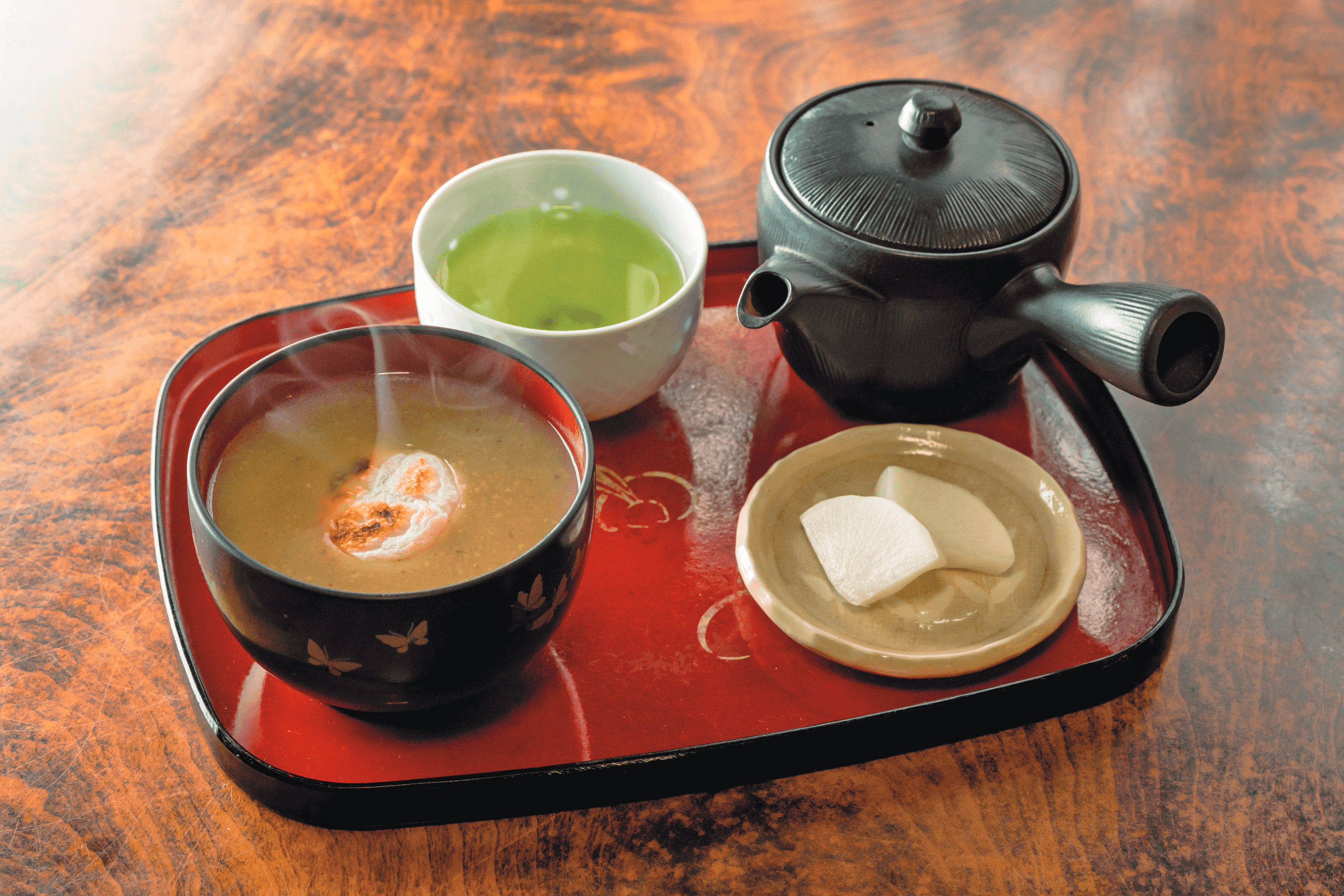
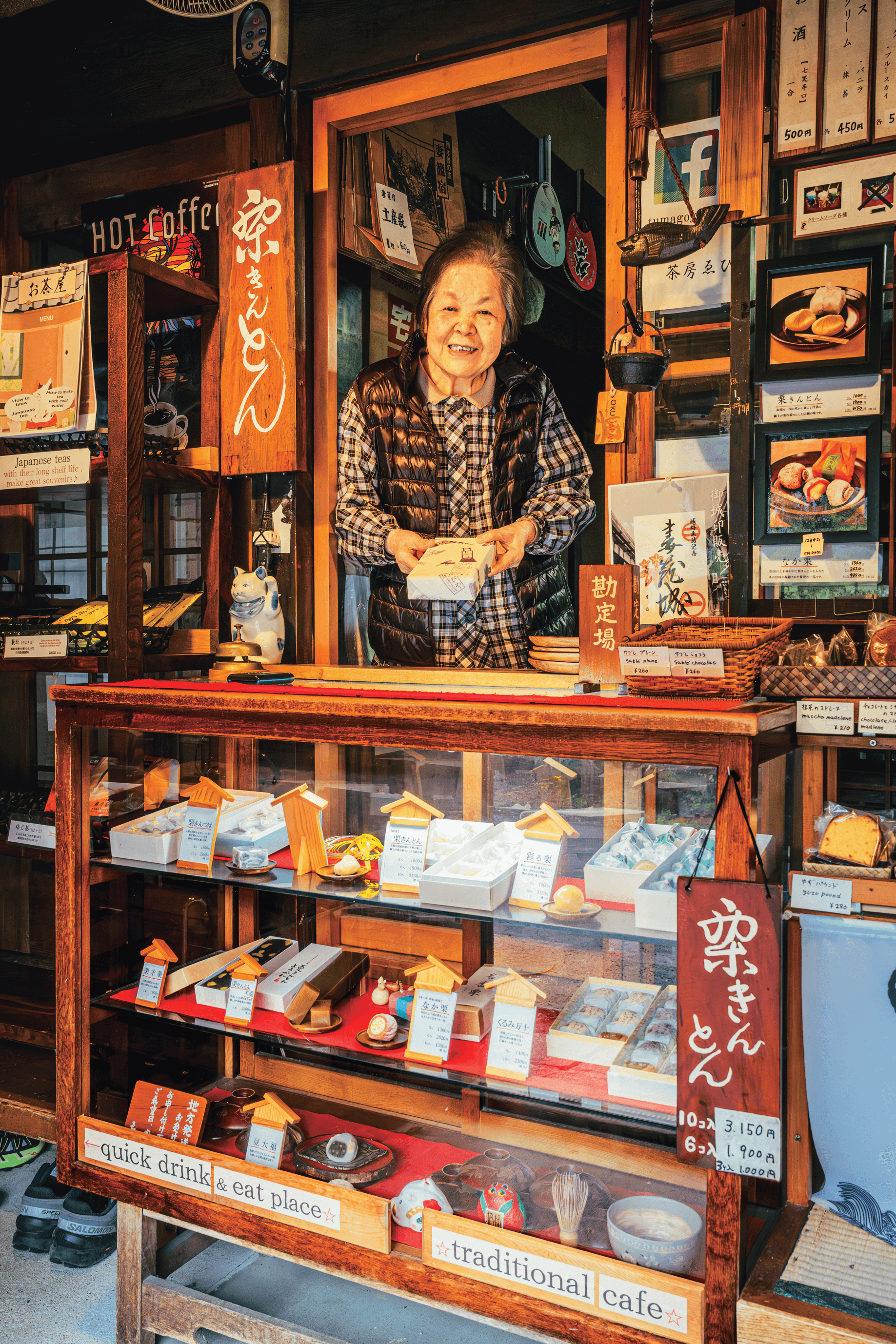
It began about half a century ago with serving tea to travelers resting under the eaves. The signature kuri-an shiruko (chestnut soup) is made with 100% chestnuts — its rich depth is impossible to resist. The anmitsu, using homemade azuki paste slowly simmered from small beans and handmade kanten jelly, is another signature not to miss.
Restaurant Magomeya
1-min walk from Magome bus stop
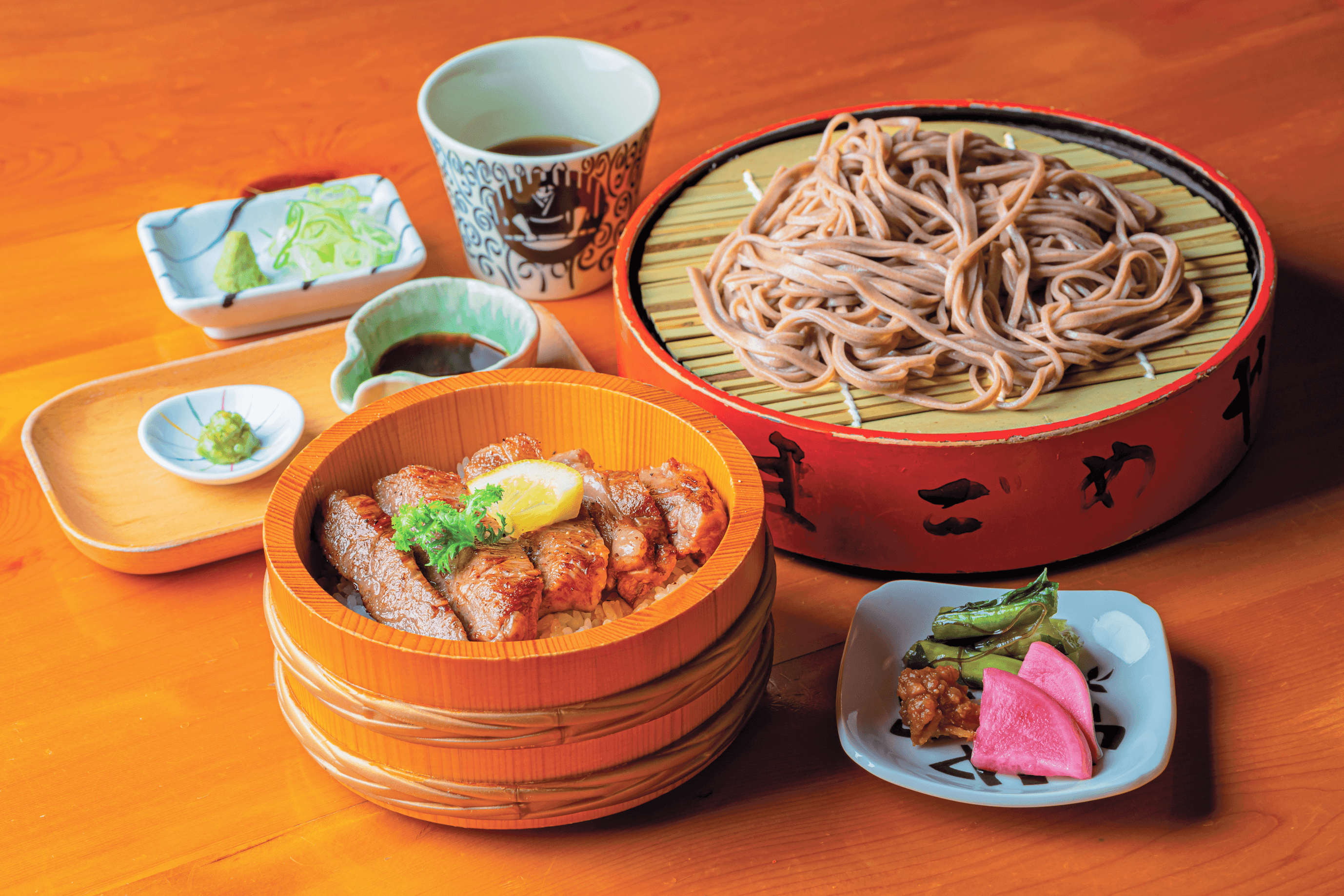
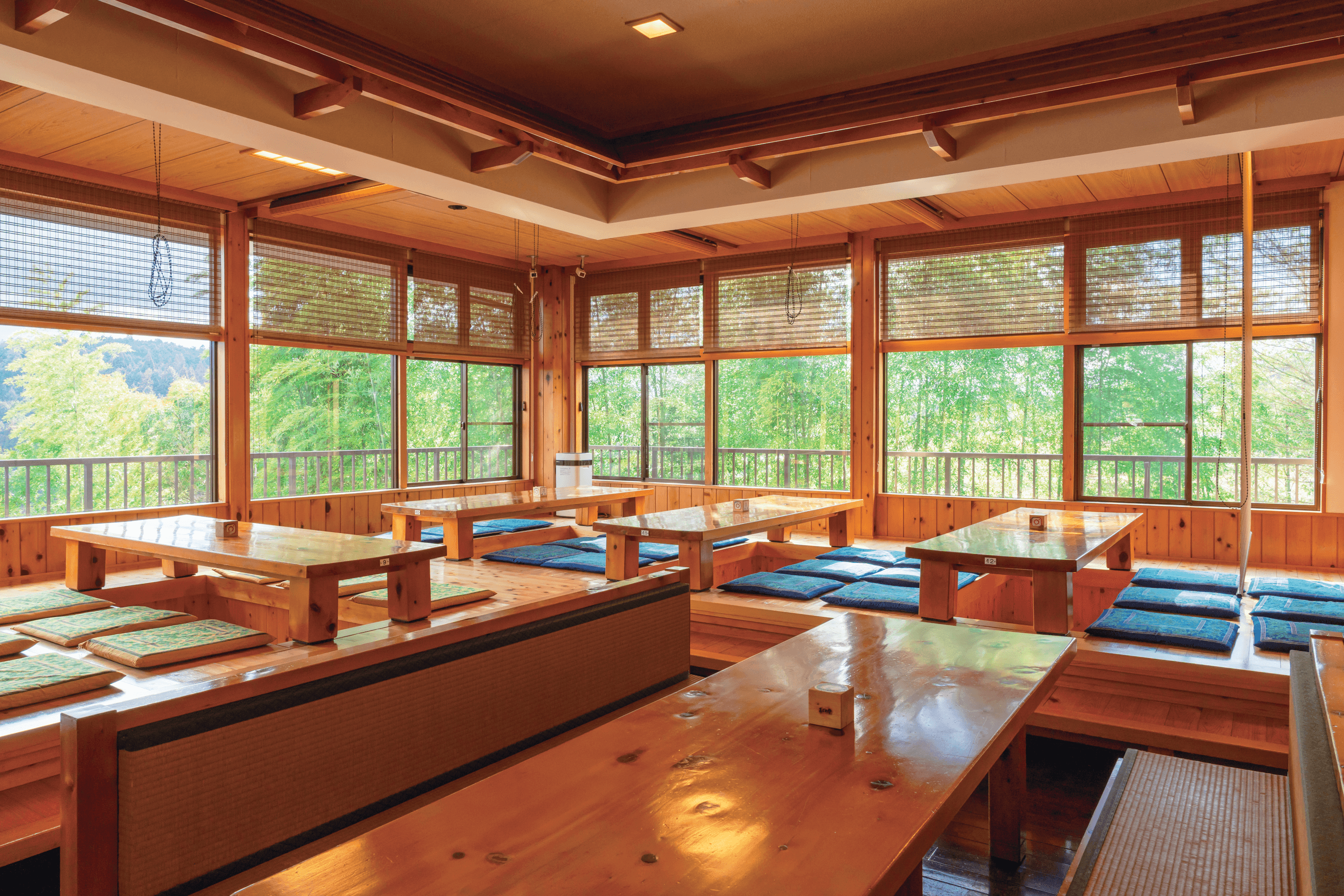
The specialties are Shinshu beef steak with melt-in-your-mouth richness, refined Magome salmon, and a sweeping view of Mt. Ena — the highest peak in Mino. In spring, the contrast of fresh green and mountain cherry blossoms adds beauty to every dish.
Ohmiya
8-min walk from Magome bus stop
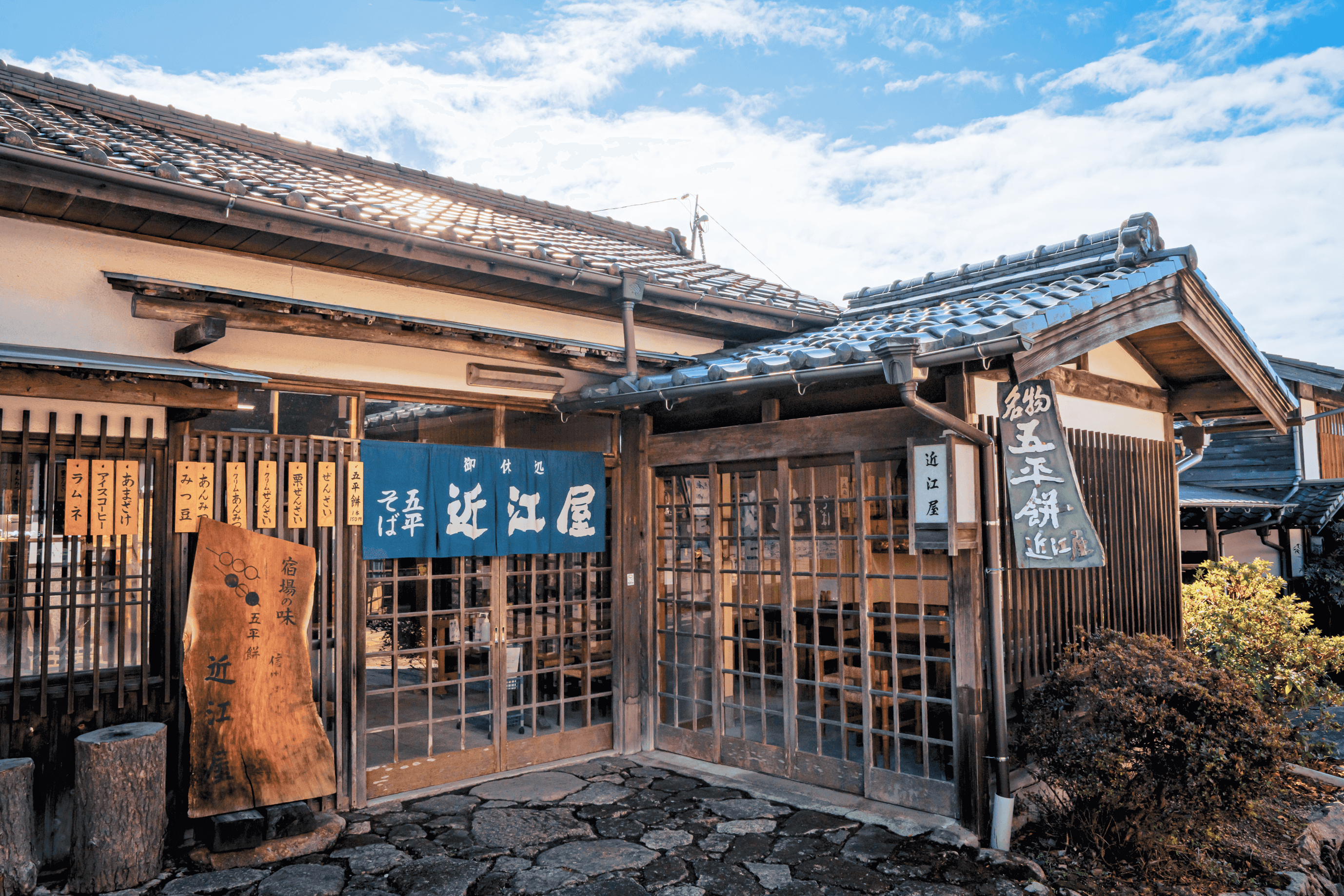
In Magome, gohei-mochi has always been round — a tradition passed down through generations. The sauce recipe hasn't changed since the shop opened about half a century ago: walnuts carefully ground in a mortar, mixed with sesame, soy sauce, and sugar into a rich, sticky paste. Sweet, savory, fragrant, and simply satisfying.
Shimoogiiya
3-min walk from Magome bus stop
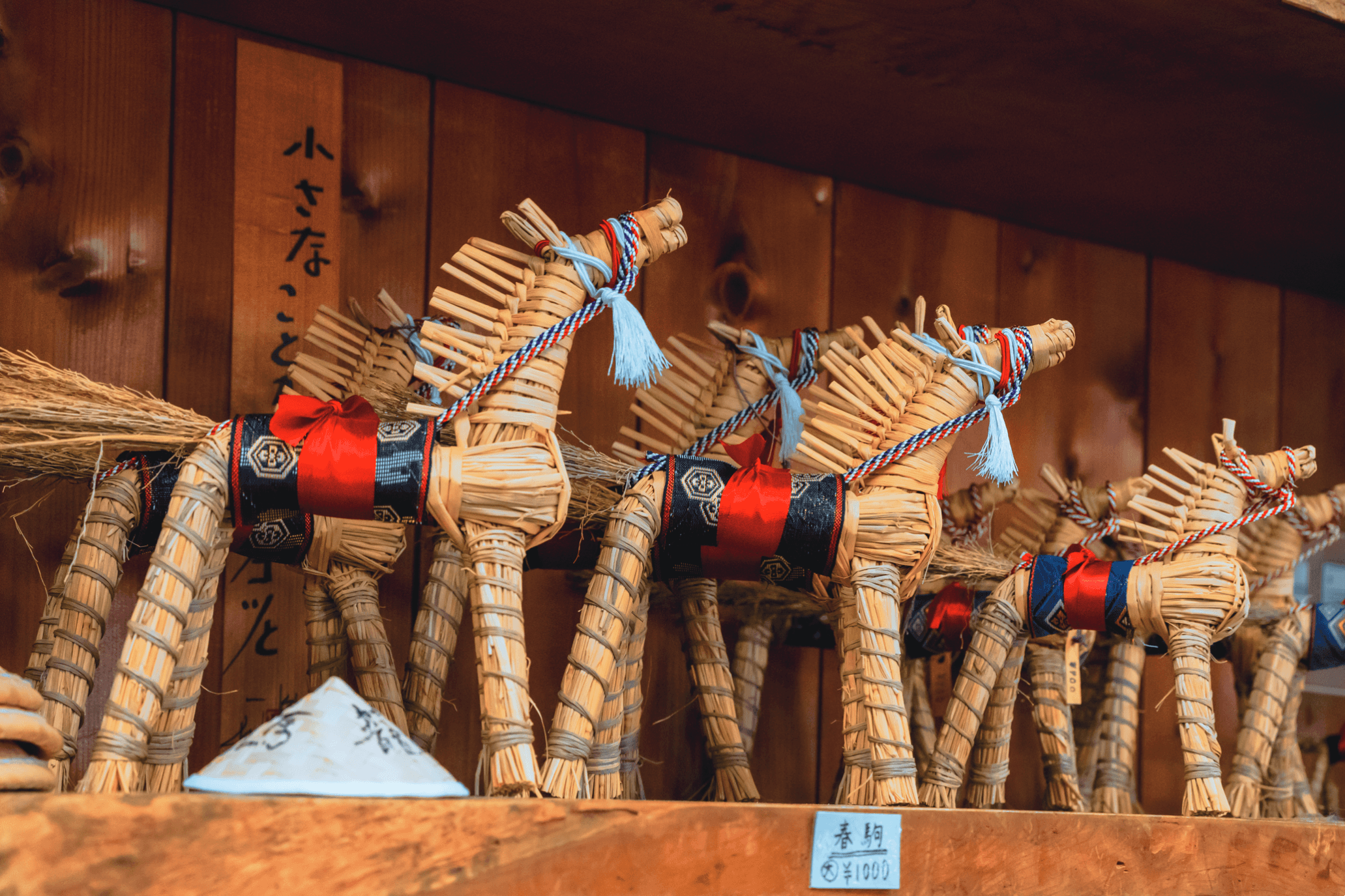
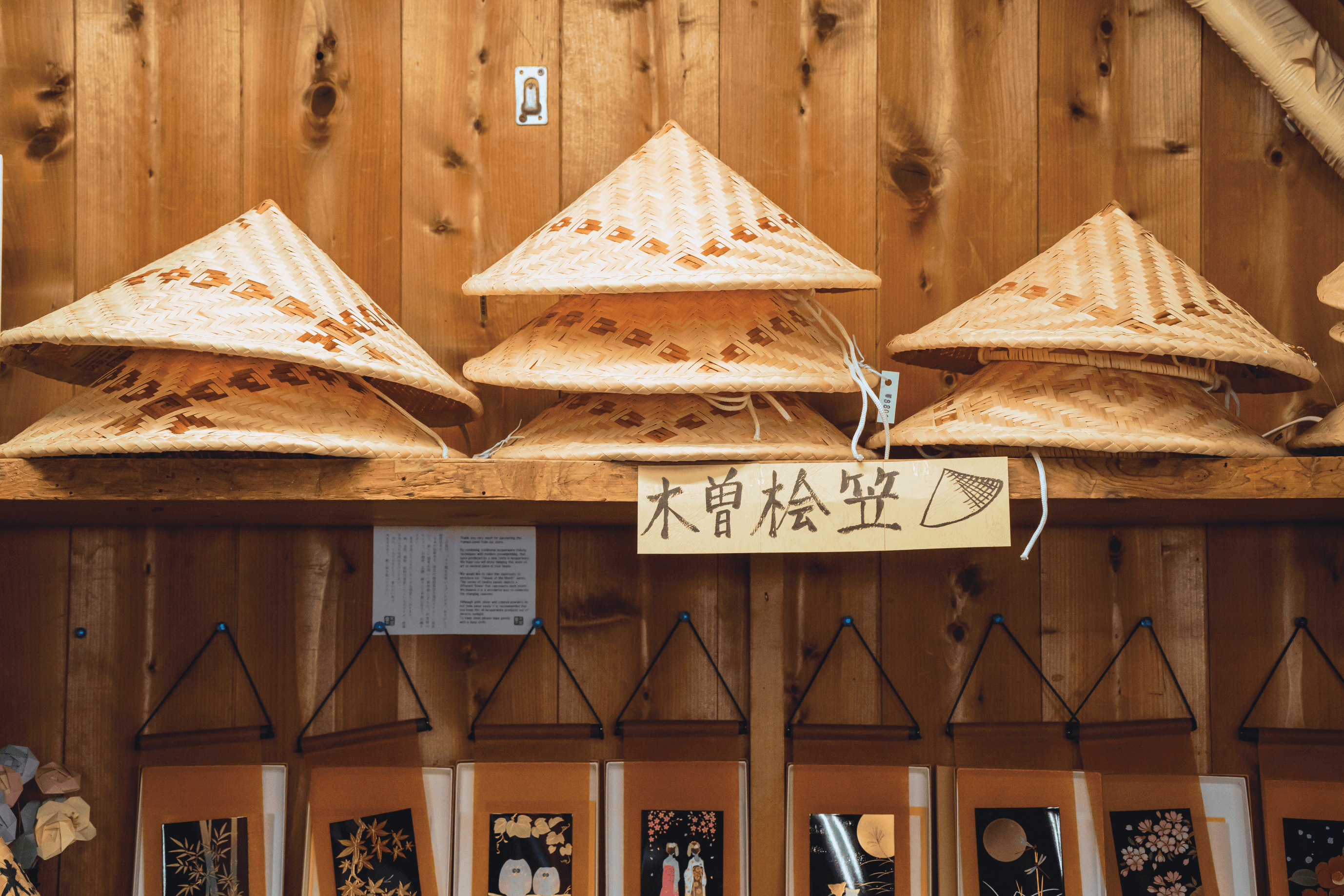
A souvenir shop stocked with Kiso folk crafts. 'Harukoma' — a traditional toy woven from straw that has been passed down in Magome — is said to welcome spring (happiness) into your home when placed facing the entrance. Each one has its own expression and character. May you find the one that speaks to you.
More to Explore
Extra spots worth a detour if your schedule allows
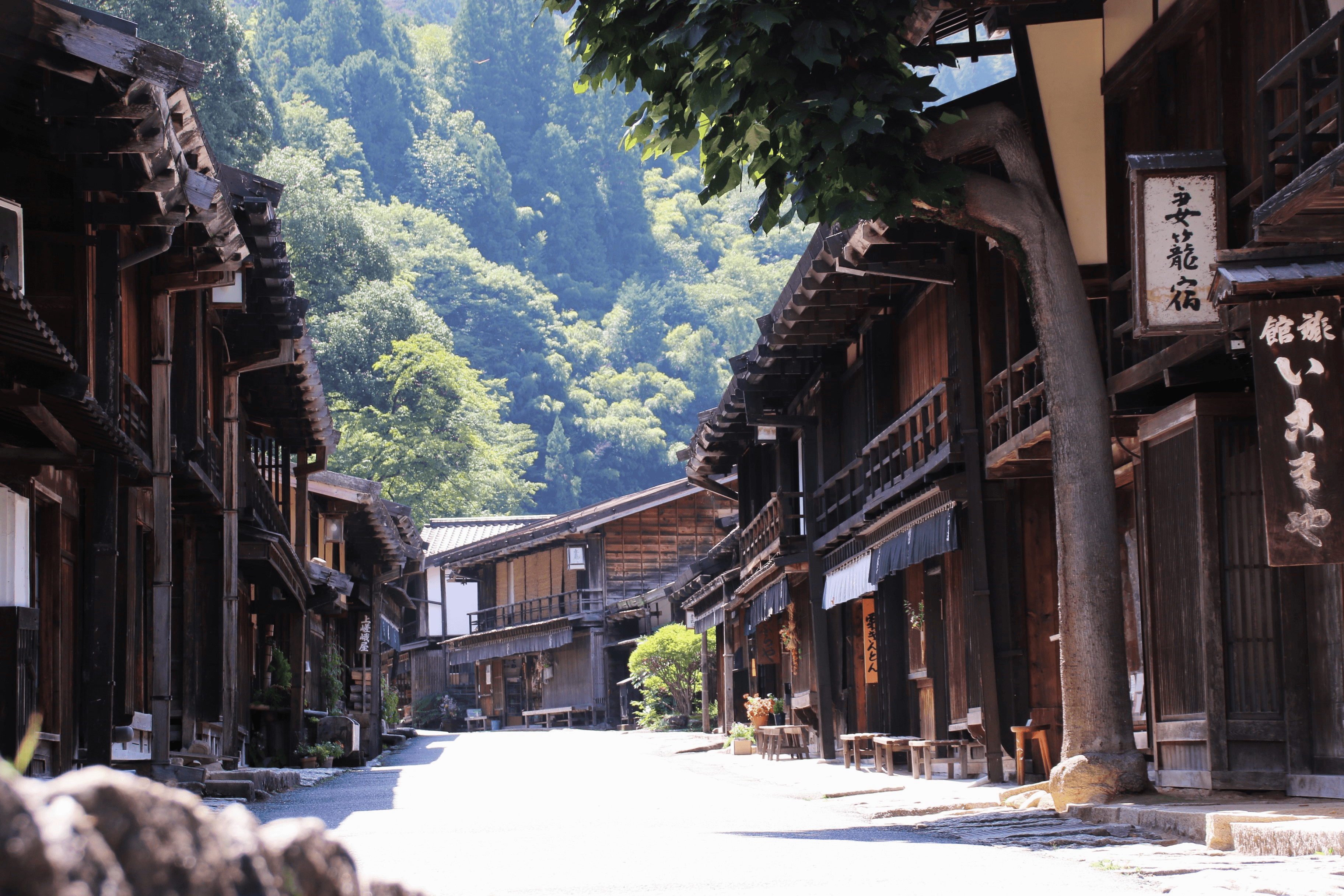
Terashita Townscape
The first area in Tsumago where a preservation movement began. The modest townhouses feature subtle craftsmanship, and the original Edo-era architecture survives exactly as it was.
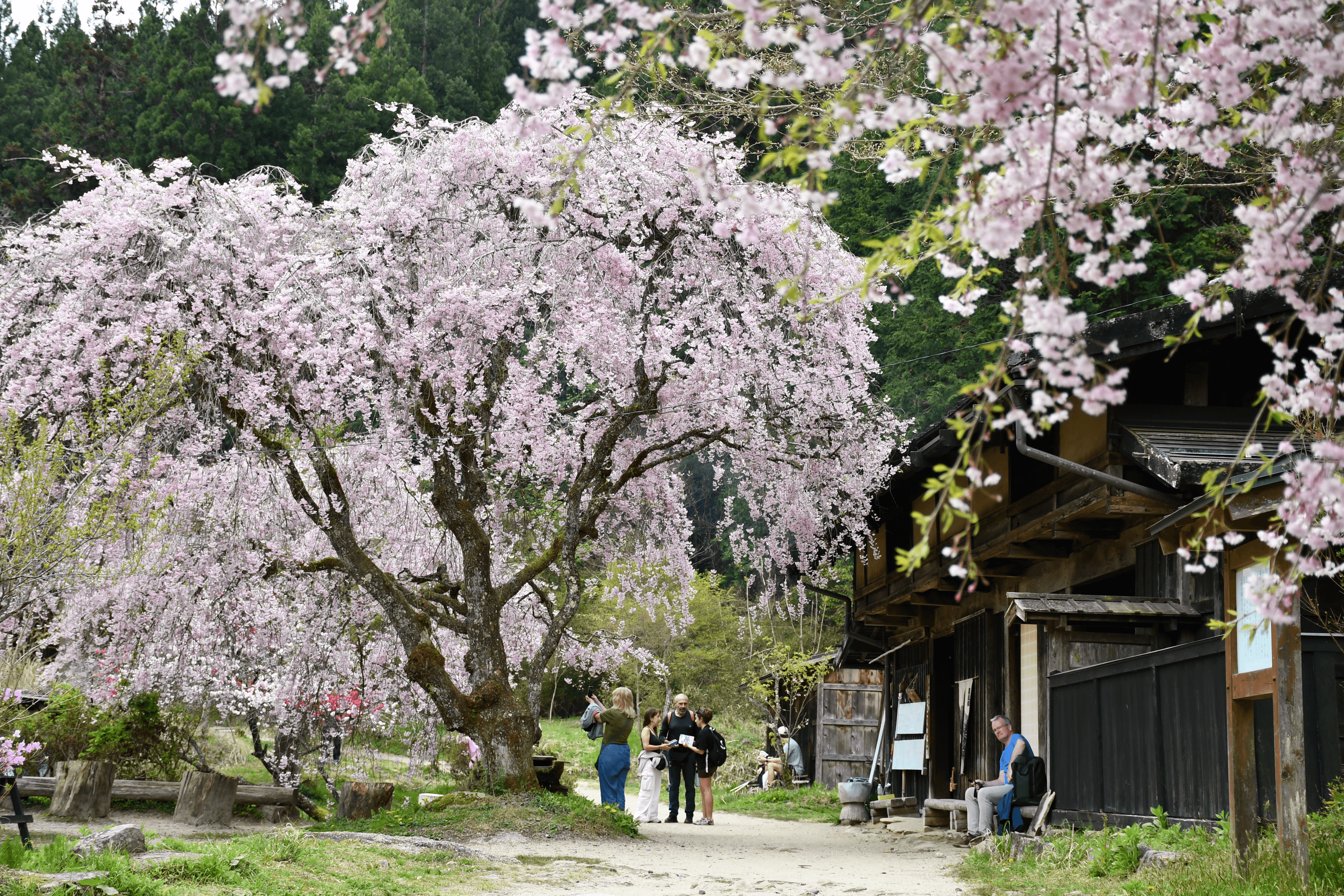
Ichikokutochi tateba-chaya
An Edo-era roadside rest hut open as a free rest stop. Where ancient travelers once paused to catch their breath, you too can stop and feel the passage of time.
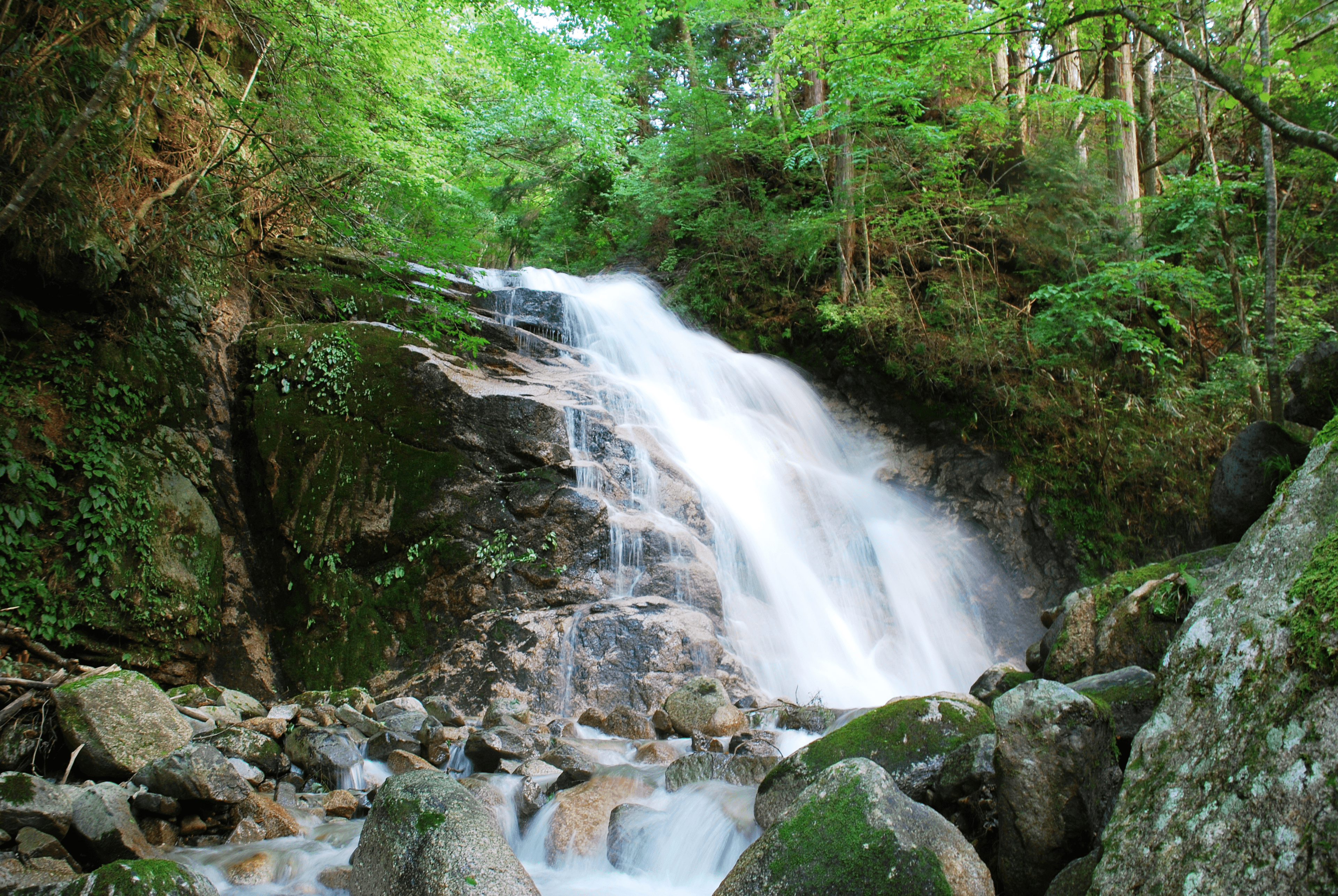
Otaki and Metaki Waterfalls
Known as a setting in Eiji Yoshikawa's novel 'Miyamoto Musashi.' The twin streams flow side by side in quiet strength — a perfect detour along the highway walk.
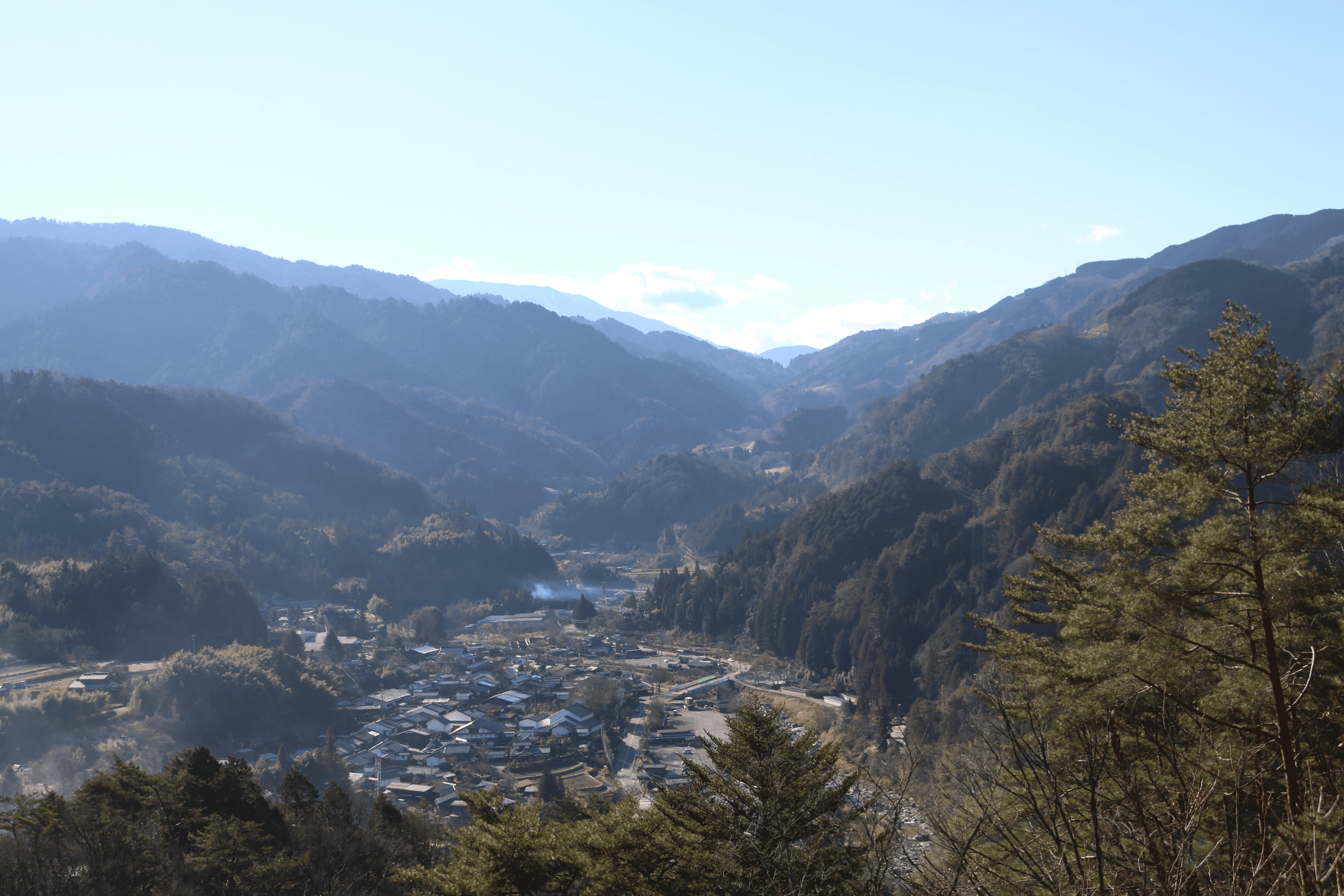
Tsumago Castle Ruins
A mountain castle that once guarded the southern Kiso valley; its earthworks and baileys still remain today. The panoramic view over Tsumago-juku and the Kiso mountains is exceptional.
Getting There
Getting to Nagoya
Nagoya to Tsumago & Magome
From Nagoya, the most convenient way to reach the Tsumago and Magome area is by the Limited Express Shinano. Buses connect from the nearest stations to each post town. The stretch between Tsumago-juku and Magome-juku is about 9 km — approximately 3 hours on foot — so walking between post towns like an Edo-era traveler is highly recommended.
To Tsumago:
To Magome:
Before You Go
Transport
Magome-Tsumago Excursion Pass
Enjoy unlimited travel on Kitaena Transport and Nagiso-machi Community Bus routes for 2 days. Available in English and purchasable as a mobile ticket through transportation apps.
IC Cards & Local Buses
IC cards such as Suica and PASMO, as well as credit cards, cannot be used on local buses in the Tsumago and Magome area. Board from the rear door and exit from the front. Pay with a ride ticket or cash when you alight.
Culture
Sightseeing Etiquette
The post-town streetscapes are designated Important Preservation Districts for Groups of Historic Buildings. Damaging structures or picking plants is prohibited. These are living communities — please do not trespass on private property or disturb residents.
Sightseeing
Evening Business Hours
Restaurants typically close around 3 PM and cafés around 5 PM. There are no early-morning shops, supermarkets, or convenience stores in the area, so if you plan to stay overnight, purchase breakfast in advance.
Cuisine
Local Food to Try
Don't miss gohei-mochi, oyaki, and soba — the staples that sustained highway travelers — along with mountain vegetable dishes and river fish cuisine unique to this mountain-ringed landscape.
Seasonal Japanese Sweets
Japanese sweets that developed to comfort weary travelers are a must. From early summer look for hoba-maki; in autumn, kuri-kinton (chestnut confection) and dried persimmons await.
Seasons
Best Season for Hiking
Spring and autumn, with their comfortable temperatures, are especially recommended for hiking. The cherry blossoms and autumn foliage along the old highway are not to be missed.
November 23rd Festival
On Labor Thanksgiving Day (November 23rd), Tsumago-juku hosts the annual 'Bunka Bunsei Fuzoku Emaki Procession,' bringing the post town to life with colorful Edo-era pageantry.
Questions about Tsumago & Magome (Nagano / Gifu)
Access & Transport
How do I get to Tsumago from Nagoya?
How do I get to Magome from Nagoya?
Is there a pass for buses between Tsumago and Magome?
Can I use IC cards on local buses in the Tsumago and Magome area?
Sightseeing & Culture
How far is it to walk between Tsumago and Magome?
What is the Nakasendo?
Are Tsumago and Magome real communities or tourist recreations?
What can I see at the Waki-Honjin Okutani museum in Tsumago?
Food
What local food should I try in Tsumago and Magome?
What is gohei-mochi?
Are there convenience stores or supermarkets near Tsumago and Magome?
SAVE THIS TRIP PLAN
High-resolution PNG — perfect for sharing or offline reference